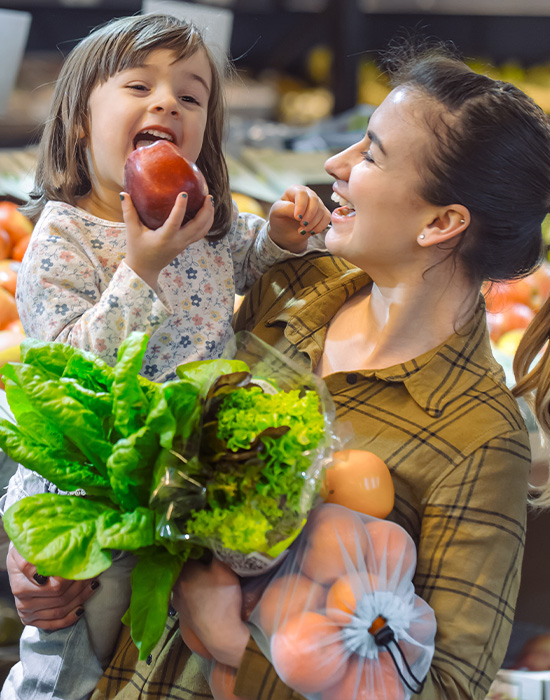

This year’s U.S. Grocery Shopper Trends report found that the average shopper visits 4.4 different retail banners in a typical month, up from 4.1 last year. While shoppers do spend a significant share of their food dollars at their primary store, very few spend all their grocery dollars at one retailer. In fact, only 13% of all shoppers are loyal to just one food retailer. So, what are the other 87% doing?
<p>By: Steve Markenson, Director of Research, Food Marketing Institute<br /> <img src="https://www.fmi.org/images/default-source/photos-for-staff-use/store-front/20161208-fmi-0911_ed-web2.tmb-large-350-.jpg?sfvrsn=c8db456e_2" data-displaymode="Thumbnail" alt="20161208-FMI-0911_ed WEB2" title="20161208-FMI-0911_ed WEB2" style="float: right; margin: 10px;" /></p> <p>If your answer was four, then you were below average. But why are grocery shoppers going to so many different stores? </p> <p>This year’s <a href="https://www.fmi.org/our-research/research-reports/u-s-grocery-shopper-trends"><em>U.S. Grocery Shopper Trends</em></a> report found that the average shopper visits 4.4 different retail banners in a typical month, up from 4.1 last year. While shoppers do spend a significant share of their food dollars at their primary store, very few spend all their grocery dollars at one retailer. In fact, only 13% of all shoppers are loyal to just one food retailer. So, what are the other 87% doing?</p> <p>These shoppers are spreading their grocery dollars across several channels and retailers to address their families’ needs and desires. As we learned from one of our ethnographic interviewees, “The whole ‘one-size-fits-all’ thing - or lack thereof - is the whole reason why I have to go to all these places.” Shoppers see the process of selecting and shopping across all these stores as a form of personalization, leveraging the strengths and specialties of each retailer. Rather than simplifying shopping, consumers are adopting increasingly complex strategies to support aspirations to eat well and achieve the balance of individual and household eating needs. Let’s look at some of these strategies:</p> <h5>Primary Bulk Shopping</h5> <p>For most grocery shoppers (92%) there continues to be one primary store where they do the bulk of their shopping. For about one-half of shoppers, that primary store continues to be a supermarket.</p> <h5>Stock Up Strategy</h5> <p>Many grocery shoppers use warehouse, supercenters or discount stores to stock up on bulk and center store products. These retailers may not be part of the weekly grocery shopping but are visited every few weeks or monthly.</p> <h5>Specialty Item Visits</h5> <p>There are stores that shoppers visit for products or brands that are unique to that store. A shopper explained to me that she makes a special trip to one store for a certain cereal her son likes, but she also shops for healthy snacks that she cannot get anywhere else.</p> <h5>Quality Item Pickup</h5> <p>Still, others do some of their grocery shopping at certain stores because of their organic or natural foods selection or perceived higher quality of produce, meat and/or seafood options.</p> <h5>Need it Now Trip</h5> <p>Then there are the quick or fill-in trips for the basics, such as milk, bread or eggs. These are often driven by convenient locations to work, school or home.</p> <p>Importantly, we find younger generations are visiting the most food retailers a month. Gen Z visits 6.2 retailers per month and Millennials visit 5.0 retailers per month to meet their household grocery needs. So, this will be a trend that FMI will be watching in the future and one food retailers should consider. Perhaps the question retailers should ask themselves is, “How can I get a larger share of my grocery shopper’s spend?”</p> <p>Dive deeper into the report with our online learning options: </p> <ul> <li><a href="https://www.fmi.org/forms/meeting/Microsite/2019Trends2">Join us July 16 for a webinar on personalization</a>. </li> <li><a href="https://www.fmi.org/events-education/webinars/webinar-recordings/view/webinar-recordings-public/2019/06/20/trends-a-look-at-todays-grocery-shopper">Listen to the recording of the first webinar on the current marketplace</a>.</li> <li><a href="https://www.fmi.org/forms/meeting/Microsite/2019Trends3">September 12<sup>th</sup> we’ll cover online shopping, health and well-being and transparency</a>.</li> </ul> <p><a href="https://www.fmi.org/our-research/research-reports/u-s-grocery-shopper-trends" class="button-secondary">Download U.S. Grocery Shopper Trends</a> </p>
Powered by Preisvergleich