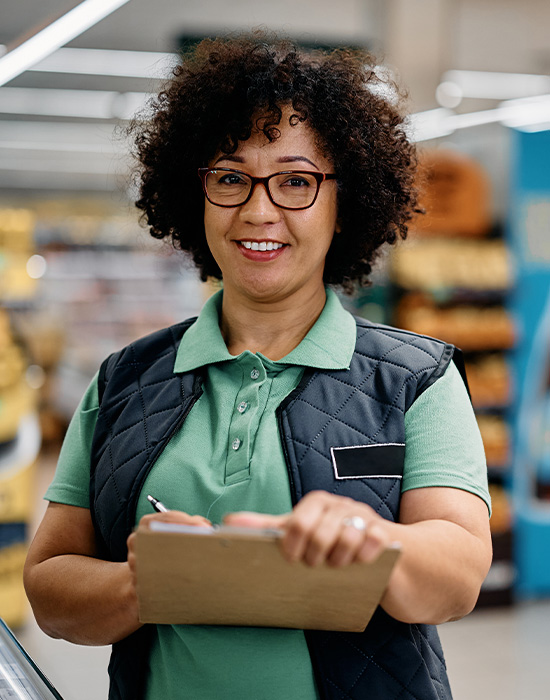

Disruptors are pervasive in our industry. Although food retailing has already changed dramatically in the last few years, it is certain that the industry will look quite different in the near future. That change is constant and is accelerating.
<p>By: Mark Baum, Senior Vice President, Industry Relations, and Chief Collaboration Officer, Food Marketing Institute</p> <p><img src="https://www.fmi.org/images/default-source/blog-images/20171129-fmi-home-shoot-0565r-lowres.tmb-large-350-.jpg?sfvrsn=7597476e_1" data-displaymode="Thumbnail" alt="Online Ordering" title="Online Ordering" style="float: right; margin-left: 10px;" />Disruptors are pervasive in our industry. Although food retailing has already changed dramatically in the last few years, it is certain that the industry will look quite different in the near future. That change is constant and is accelerating. </p> <p>In the recent, research report, “The Future of Food: New Realities for the Industry," authored by FMI and Kurt Salmon, a part of Accenture Strategy”, we examine three critical areas of change in the food industry: 1) the battle for the food marketplace and new models and disruptors that are bringing new levels of convenience to consumers; 2) the need for nimble companies and commercial solutions that support innovation to meet changing consumer desires; and 3) how the food production system will reduce waste and expand the food base, to a growing population across the world.</p> <p>Notably, we found that one thing food retailers can count on is the quickly evolving character and preferences of the consumer. Here are seven attributes regarding the shopper we need to anticipate and address as we move forward into the future:</p> <p><strong>1. A focus on health.</strong> Consumers increasingly see a correlation between what they eat and how they feel. In the future, many consumers will increasingly choose the foods they eat based on their unique health needs.</p> <p><strong>2. Transparency and sustainability. </strong>Social and environmental welfare issues are growing in importance among consumers. The report cites analysts who also suggest that more than half of shoppers are willing to pay more for products and services that support the causes they believe in. At the same time, technology provides them the ability to inform themselves of the journey their food takes from its source to consumption. Retailers must be ready to respond with the information consumers want.</p> <p><strong>3. Social consciousness. </strong>Today, millennials outnumber baby boomers, and nine out of 10 of them are more likely to buy from companies that support their views on social, environmental and other issues. The growing market trend toward “responsible products” is not a coincidence.</p> <p><strong>4. Trust. </strong>For one-third of U.S. consumers, trust in a company - however they define that value - ranks among their top-three purchase drivers. In the future, consumer goods companies and retailers alike will have to examine their own value systems and how they are communicating to shoppers.</p> <p><strong>5. The influence of the tribe. </strong>With the advent of social media platforms, consumers consider themselves members of “tribes.” Nearly half of consumers are more likely to take the advice of others they feel share their interests about products and services than they were in an earlier time when celebrities were often called upon to endorse brands.</p> <p><strong>6. The digital self. </strong>As artificial intelligence tools become more prevalent, consumers will rely more on technology to make decisions for them about which products they will purchase and retailers they will patronize. Digital assistants will make many purchasing decisions for consumers and may not necessarily respond to the same types of influences as consumers themselves might. Think of this as the age of digital ‘agentry’.</p> <p><strong>7. The rapid advance of technology. </strong>It took more than 60 years for the telephone to reach the point where it was used by 90 percent of U.S. households. It took 25 years for the cell phone to reach the same level of penetration. Fast forward to today, according to a recent social media use <a href="http://www.pewinternet.org/2018/03/01/social-media-use-in-2018/">survey</a> by PEW, some 78% of 18- to 24-year-olds use Snapchat, and 71% of these users visit the platform multiple times per day. That kind of rapid technological advancement will force retailers to respond to consumer demands and needs practically in real time.</p> <p>“<a href="https://www.accenture.com/us-en/_acnmedia/PDF-70/Accenture-Future-Of-Food-New-Realities-For-The-Industry.pdf">The Future of Food: New Realities for the Industry</a>” supports the suggestion that we are a new :”golden age of experimentation” in the food retail industry, and as long as operators remain focused on the consumer, they can inspire an entrepreneurial and modern way of thinking to remain successful.</p>
Powered by Finanznachrichten