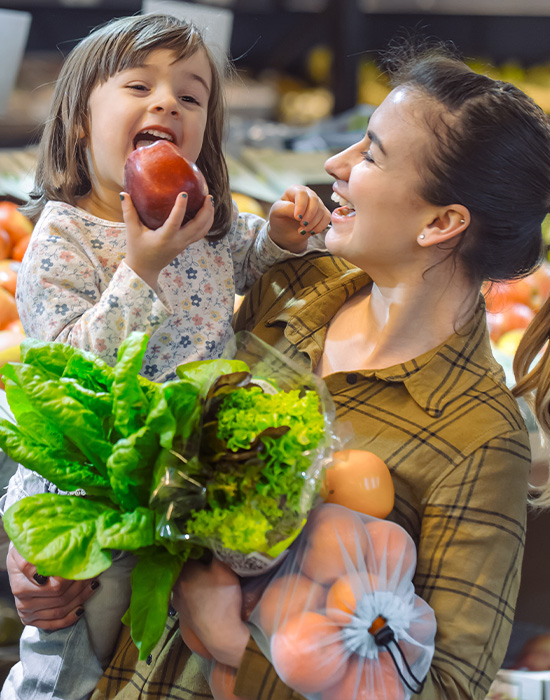

Two Millennials in FMI’s office, compared their grocery shopping habits to FMI's 2017 U.S. Grocery Shopper Trends report.
<p>By: Melaina Lewis, Communications Specialist and Adam Friedlander, Food Safety Specialist, Food Marketing Institute<br /> <br /> <img title="Grocery Carts Trends" style="margin-left: 10px; float: right;" alt="Grocery Carts Trends" src="https://www.fmi.org/images/default-source/blog-images/carts---trends.tmb-large-350-.jpg?sfvrsn=adcc7e6e_1" data-displaymode="Thumbnail" />Anytime you Google “Millennials and grocery shopping,” your search is guaranteed to produce close to a million results. Millennials are a hot topic when it comes to disrupting the traditional norms of various industries, and the food retail industry appears to be no exception. This year, conversation intensified around Millennials’ shifting shopping habits, and how their increased digital usage will affect the future of food retail.</p> <p>As two Millennials in FMI’s office, we decided to compare our grocery shopping habits to<a href="https://www.fmi.org/our-research/research-reports/u-s-grocery-shopper-trends"> </a><a href="https://www.fmi.org/our-research/research-reports/u-s-grocery-shopper-trends">FMI's 2017 U.S. Grocery Shopper Trends</a> report. So off we went to a nearby grocery store to do our shopping and offer our take. Here’s what we found:</p> <p><strong>Melaina’s Shopping Trip:</strong></p> <p><strong></strong><strong>Online Shopping</strong> - While most of the store’s perimeter items ended up in my basket, as I shopped the aisles I quickly found myself identifying the items I often purchase online. In the past year, it’s safe to say my digital shopping habits have moved from curiosity to comfort. <a href="https://www.fmi.org/our-research/research-reports/u-s-grocery-shopper-trends">U.S. Grocery Shopper Trends 2017</a> finds: </p> <ul> <li>Among the products shoppers say they have ordered online during the past year, Millennials continue to select a narrow range of products to purchase online.</li> <li>In the mix of less frequented food sources, e-commerce has passed a tipping point during the past year, with large numbers of Millennials suddenly more comfortable with shopping online, albeit still confined to a limited breadth of food products.</li> <li>This year, however, the bigger news is how comfortable Millennials have suddenly become comfortable with using online shopping for their grocery needs.</li> <li>Online-only store channel shopping frequency went from 28 percent in 2016 to 43 percent in 2017.</li> </ul> <p><strong>Corporate Social Responsibility</strong> - Although price drove my purchasing decisions, my eyes gravitated toward food that promoted its commitment to ethical animal welfare practices, fair labor and sustainability. In the end, those products may have not earned a percentage of my grocery spending budget, but they grew my brand and loyalty recognition for future trips. According to <a href="https://www.fmi.org/our-research/research-reports/u-s-grocery-shopper-trends">Trends 2017</a>:</p> <ul> <li>Millennial shoppers especially want to support companies that share their values and prioritize a broader good. </li> <li>Millennials are most apt to judge a company by its business ethics and sustainability practices. </li> <li>Shoppers want food retailers and manufacturers to be open and honest about (within products).</li> </ul> <p><strong></strong><strong>Adam’s Shopping Trip:</strong></p> <p><strong>Food Safety</strong> - When I purchase items from retailers or wholesalers, I assume the food I’m about to consume will be free of pathogenic bacteria and undeclared allergens. As a millennial shopper, I mix-and-match various omnichannel shopping methods to purchase food, and I’m always confident that retailers and wholesalers will ensure the safety of our food, regardless of how I purchased the food. <a href="https://www.fmi.org/our-research/research-reports/u-s-grocery-shopper-trends">Trends 2017</a> reports:</p> <ul> <li>94 percent of millennial shoppers trust the food they purchase from stores are safe, a 3 percent increase from 2016.</li> </ul> <p><strong>Transparency in Stores</strong> - Additionally, as a millennial grocery shopper, I want simple, instant and honest access to information about the food I’m trying to purchase. Looking beyond the physical food label, I use mobile applications and websites to learn more about nutritional content, allergen information, corporate social responsibility and recalled products. According to the <a href="https://www.fmi.org/our-research/research-reports/u-s-grocery-shopper-trends">Trends 2017</a> data:</p> <ul> <li>72 percent of millennials indicated they are somewhat or very likely to scan a QR code/label, a rate 17 percent higher than Gen X.</li> </ul> <p>There are two applications I frequently use to better understand the food I’m purchasing:</p> <ul> <li><a href="https://www.foodsafety.gov/keep/foodkeeperapp/index.html">FoodKeeper</a>:<strong> </strong>This app and online database from USDA, FMI and Cornell University’s Department of Food Science, has information on food recalls, food storage timelines for over 500 refrigerator, freezer and pantry items.</li> <li><a href="http://www.smartlabel.org/">SmartLabel™</a><strong>: </strong>This digital program allows shoppers to access detailed ingredient and product information about thousands of food, beverage, personal care, household and pet care products by scanning products with a mobile app or searching online. </li> </ul> <p>As we venture further into the digital age, monitoring purchasing behaviors by millennials, like us, will remain vital to understand the future of food retail. The increase of millennial shoppers buying their weekly groceries through various omnichannels means a continued effort to guarantee food safety and ethical responsibility in a transparent manner. </p> <p>For more information about shopper behavior in food retail and <em>2017 U.S. Grocery Shopper Trends</em>, visit <a href="http://fmi.org/grocerytrends">FMI.org/GroceryTrends</a>. </p>
Powered by Steuernachrichten