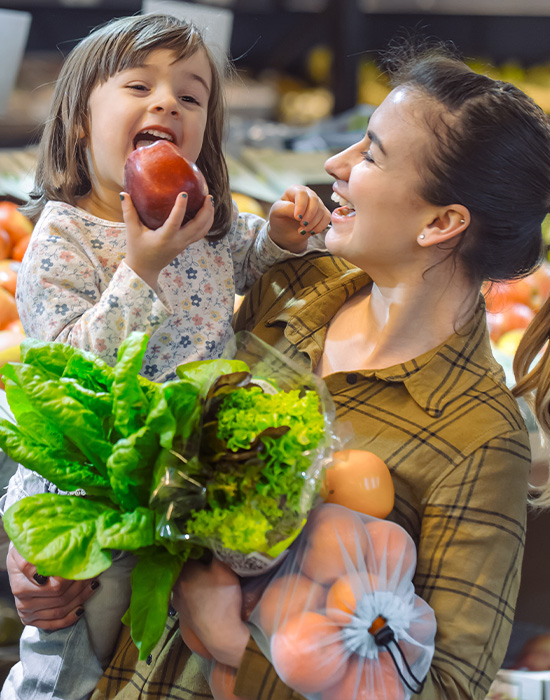

Already a hybrid of restaurants and retail, grocery foodservice programs straddle concurrent shopper interest in convenient, high quality, good-tasting, nutritious and safe meals, snacks and drinks. Consumers may not be able to share a utensil at the hot food or soup bar, but they do share many common needs that can be met at a store’s foodservice area.
<p>By Rick Stein, Vice President, Fresh Foods, FMI</p> <div class="mg-image--circular" style="float: right; margin: 10px;"><img src="https://www.fmi.org/images/default-source/photos-for-staff-use/deli/fmi-12092014_182_web.tmb-large-350-.jpg?sfvrsn=dbe89a6f_2" data-displaymode="Thumbnail" alt="FMI-12092014_182_WEB" title="FMI-12092014_182_WEB" /></div> <p>If you told me this time last year that the salad bar would be just a memory and that there would be a run on yeast for homemade bread, I would have thought that you might have imbibed too much spiked eggnog or stayed up too late wrapping presents.</p> <p>To be sure, it’s a different marketplace and a decidedly different consumer base as we head into 2021. (I’ll refrain from using the phrase “unprecedented times”). As we rouse ourselves from the thick fog of the pandemic and other disruptive events that marked this past year, we can make out a path – or more succinctly, multiple paths – forward in the way we provide and sell food to our consumers.</p> <p>The pandemic-driven flip from foodservice to retail that started in spring which centered a bit in the summer before flipping again in the most recent COVID-19 surge, has permanently impacted foodservice, grocery and foodservice-at-retail programs in some way. As restaurants struggle mightily and food retailers juggle increased demands, changing supply chains and new ways of providing products to their customers, foodservice programs in grocery stores are in a familiar position: the middle.</p> <p>That’s not a bad place to be, actually. Already a hybrid of restaurants and retail, grocery foodservice programs straddle concurrent shopper interest in convenient, high quality, good-tasting, nutritious and safe meals, snacks and drinks. Consumers may not be able to share a utensil at the hot food or soup bar, but they do share many common needs that can be met at a store’s foodservice area.</p> <p>Grocers can think of this as an opportunity to deliver on more of those need states and provide the best of many worlds in their foodservice programs For example, we know that consumers want to eat better to improve their health and well-being and would be interested in healthy take-home items that fit their time and budget in a way that other channels do not. FMI’s recent <a href="https://www.fmi.org/forms/store/ProductFormPublic/power-of-foodservice-at-retail-2020"><em>Power of Foodservice at Retail</em></a> report found that nearly 65% of shoppers say they focus a lot or put some level of effort against choosing healthy, nutritious meals when buying from grocery foodservice. Offering grab-and-go- pre-packaged salads, bowls and other heathy prepared foods is both a short-term fix in a pandemic and a long-term solution to the desire for health and convenience.</p> <p>On that point, shopper demand for convenience – always there, but recently re-shaped with people’s new priorities, schedules and habits – can be met with other solutions in retail foodservice programs. Consumers accustomed to getting restaurant food delivered to their doorstep or brought to their car at the curbside can be encouraged to use apps and other technologies to get a restaurant-quality meal delivered or picked up from their grocery store, along with other items on their shopping list for a two-in-one task.</p> <p>The <a href="https://www.fmi.org/forms/store/ProductFormPublic/power-of-foodservice-at-retail-2020"><em>Power of Foodservice at Retail</em></a><em> </em>report reveals a big opportunity for helping shoppers order foodservice items more easily from their favorite retailer. While more than half (54%) like the idea of using a grocery foodservice-specific app, only a third have ordered from retail foodservice for pickup or delivery. That’s mostly because it just doesn’t occur to them to do it. Stores can put that option more top of mind both in-store and in online channels to boost the visibility of their foodservice programs and lift sales at a time when people aren’t quite back in stores picking up a hot chicken for a post-work or post-school dinner.</p> <p>Looking ahead to a year that will likely be a mashup of the regularity of 2019 with the novelty of 2020, the foodservice-at-retail program can be a solution that meets consumers where they are, whether it’s their interest in eating healthy or getting a hot meal delivered or easily picked up. Part of the beauty of such foodservice programs is that recipes can be tweaked, packaging can be added or changed and displays updated without too much alteration to the infrastructure, keeping that path forward clear.</p> <a href="https://www.fmi.org/forms/store/ProductFormPublic/power-of-foodservice-at-retail-2020" class="button">Download Power of Foodservice at Retail</a>
Powered by Versicherungsvergleich